


Defense IT Insights Strategic Landpower Dialogue
Land power in Korea.
Sensing comes first.
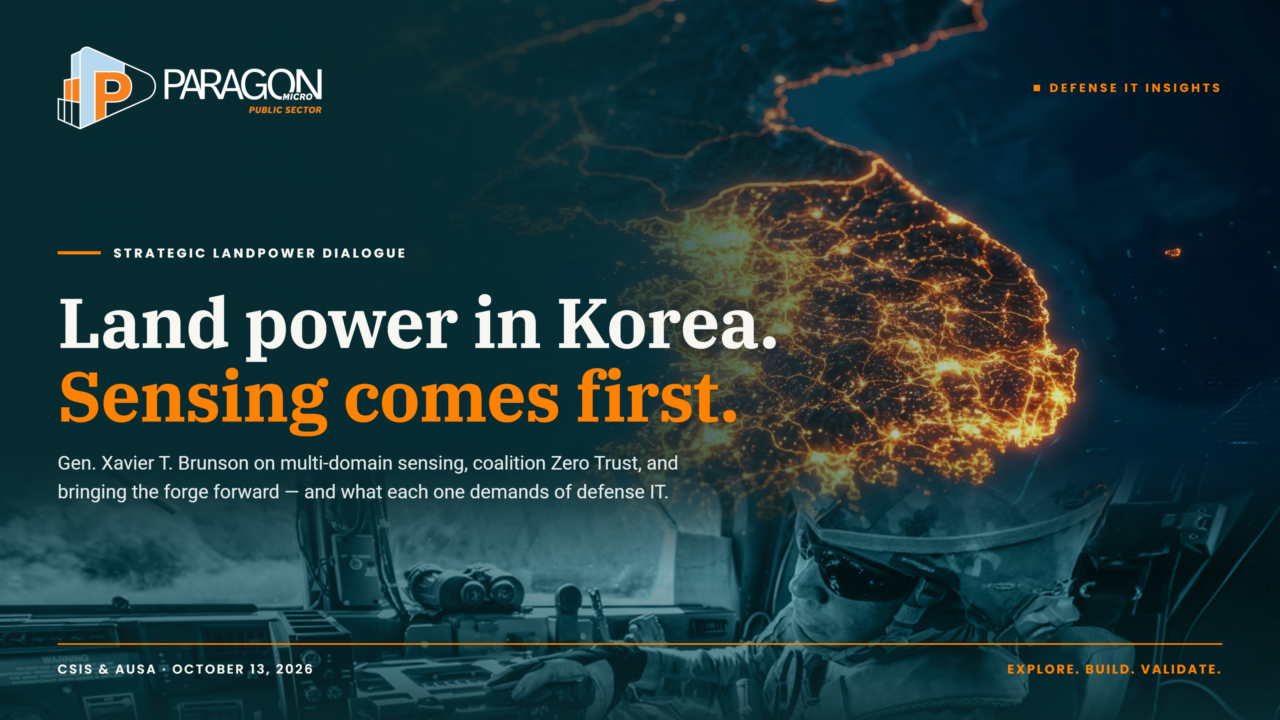
What Gen. Xavier T. Brunson (UNC, CFC, and USFK) told CSIS and AUSA about a North Korea that learns in combat, Korea’s central position on the East-Up Pacific map, and the multi-domain sensing, coalition Zero Trust networks, and forward sustainment hubs the alliance requires.
Gen. Xavier T. Brunson commands three critical military organizations simultaneously on the Korean Peninsula: United Nations Command (UNC), ROK–U.S. Combined Forces Command (CFC), and U.S. Forces Korea (USFK). On October 13, 2026, he joined the Center for Strategic and International Studies (CSIS) and the Association of the United States Army (AUSA) for their Strategic Landpower Dialogue to outline what it takes to deter a North Korea that is actively learning from modern combat.
Across more than an hour of testimony, Brunson’s operational priorities repeatedly converged on the digital and physical backbone behind military power. Deterrence in the Indo-Pacific, he argued, depends less on raw troop headcount than on "sensing, sensing, sensing" across space, cyber, and the electromagnetic spectrum; "fulsome Zero Trust environments" that allow U.S. and allied forces to share actionable data at machine speed; and "bringing the forge forward" so broken equipment is repaired in theater rather than shipped back to the continental United States (CONUS).
For Department of War (DoW) program offices, Army project managers, and defense system integrators, Brunson’s remarks form a concrete technical requirements document. Every capability he described relies on ruggedized edge compute, high-density storage, coalition-ready Zero Trust networking, and pre-staged lifecycle sustainment that must be engineered, tested, and delivered before a crisis begins.
Executive Summary · Key Takeaways for Defense Leaders
- North Korea is compressing its RDT&E cycle in active combat: By deploying personnel and weapons alongside Russia, the DPRK is gaining real-world experience in strategic rail/road logistics, coalition coordination, Russian electronic warfare (EW) jammers, and KN-23 ballistic missile telemetry—while lessons flow across a four-nation salient of Russia, North Korea, China, and Iran.
- Korea anchors the "East-Up" Indo-Pacific map: Rotating the Pacific map 90 degrees so east sits at the top reveals why USFK—the only U.S. military force stationed on the Asian continent—anchors a strategic triangle connecting Seoul, Tokyo, and Manila along corridors carrying 48% to 52% of global trade.
- Sensing only deters when coalition networks can share the picture: Brunson named multi-altitude sensing as the primary mission for a Multi-Domain Task Force (MDTF) in Korea, paired with Integrated Battle Command System (IBCS) fire control, AI target recognition, and unclassified/releasable Zero Trust enclaves to close the technological interoperability gap.
- "Bringing the forge forward" applies to IT as much as airframes and armor: Just as USFK wants regional sustainment hubs in Korea, Japan, and the Philippines to mill F-16 parts and repair Infantry Squad Vehicles in theater, dispersed C2 and sensor sites require pre-staged, golden-imaged IT hardware spares that eliminate the months-long CONUS depot loop.
Chapter 01 Context & Command Authorities
What the Strategic Landpower Dialogue covered
The conversation spanned North Korean conventional and nuclear modernization, Republic of Korea (ROK) Army force improvements, integrated offensive and defensive fires, and U.S. strategic interests across the Indo-Pacific. Brunson also addressed the September 2026 Demilitarized Zone (DMZ) landmine explosions, the conditions-based transfer of wartime operational control (OPCON), and trilateral security cooperation among Washington, Seoul, and Tokyo.
Understanding Brunson’s operational perspective starts with the three distinct command hats he wears simultaneously on the peninsula:
United Nations Command
The multinational military command that oversees the 1953 Korean War armistice agreement. UNC led the joint investigation with the ROK military into the September 2026 DMZ landmine blasts and coordinates multinational contributions across the region.
Combined Forces Command
The binational ROK–U.S. warfighting headquarters integrating South Korean and American units under a single command structure. Wartime operational control resides here until conditions-based OPCON transfer requirements are fully met.
U.S. Forces Korea
The joint U.S. sub-unified command comprising American ground, air, naval, space, and special operations forces on the peninsula—representing the only U.S. military forces stationed on the Asian mainland.
Chapter 02 The Vision · 03:10 – 05:20 & 48:22 – 51:45
Precise land power, the last 25 meters, and looking beyond the drone
Verified Transcript Moments Click any moment to load clip in player
 00:03:50 – 00:03:59
Clip 01
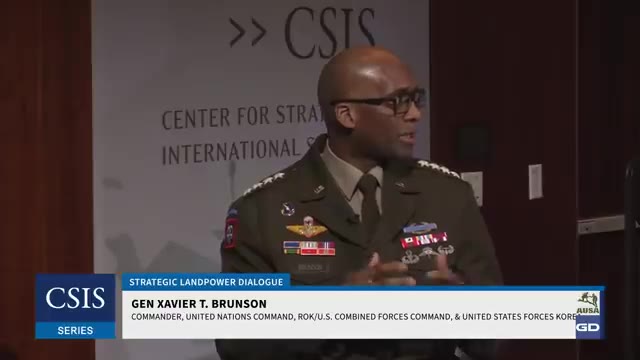
“...in the future warfare will require people to see first, understand first, and then act decisively.”
 00:04:20 – 00:04:35
Clip 02
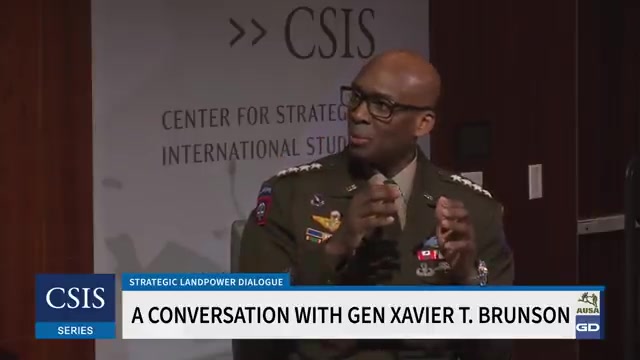
“...at the end of the day, there’s still 25 meters between where someone is and where an objective is. It’s got to be covered. That can only be seized, secured, and held by people on the ground.”
 00:49:39 – 00:49:50
Clip 03
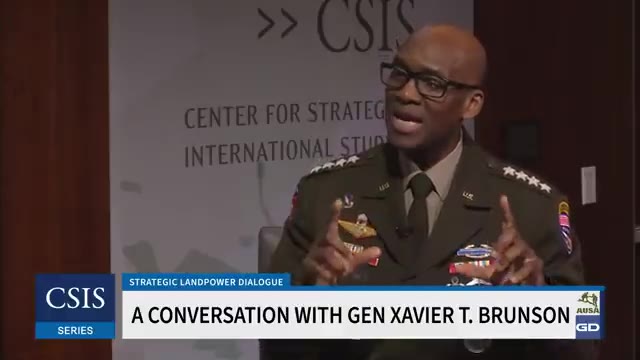
“...we have to concern ourselves with what’s next. And if we don’t take time, if we are so drone dominantly focused that we’re only looking at drones and we’re only looking at autonomy, we’re not thinking about the next thing.”
Asked how land power on the Korean Peninsula will evolve over the coming decade, Brunson drew a parallel to Starship Troopers—where ubiquitous battlefield sensors, autonomous systems, manned-unmanned teaming, and artificial intelligence allow ground forces to apply combat power with surgical speed and precision. Yet he was emphatic that technology does not eliminate the human requirement: covering the final 25 meters to seize, secure, and hold an objective still belongs to the individual soldier on the ground.
Dispersed formations, hardened targets, and why training cannot wait
On the Korean Peninsula, terrain and adversary doctrine—including extensive tunneling and hardened targets—compound the lessons emerging from Eastern Europe and the Middle East. Because modern sensors and precision fires make massed formations prohibitively costly, armies are shifting toward dispersed, disaggregated formations. Protection, the warfighting function that preserves force survivability, now commands global attention because no military can assume uncontested air superiority, jam-proof communications, or an untouched rear sanctuary.
Brunson warned that adapting training and doctrine to these realities cannot wait (`15:36–16:13`). Another shift in the character of war is already forming, and any force that delays will find itself "fighting the last fight" while scrambling to transition under fire.
Seeking the next offset: AI, LLMs, and looking past the drone
While acknowledging that drones and counter-UAS capabilities—from non-kinetic directed-energy lasers to concepts like electromagnetic armor (`00:51:12`)—will continue to spiral, Brunson cautioned against becoming so fixated on today’s drone fight that planners miss the next decisive offset (`00:48:22`). He urged defense leaders to look ahead to how autonomous systems, artificial intelligence, and large language models (LLMs) will reshape decision speed and command and control.
Seeing first depends on sensor data that reaches a decision-maker in time, processed at the tactical edge over a network an adversary cannot jam or exploit.
Paragon Micro Public Sector perspective on the Strategic Landpower DialogueChapter 03 The Threat · 05:59 – 13:26 & 26:06 – 31:27
A North Korea that learns in combat—and a 4-nation salient
Verified Transcript Moments Click any moment to load clip in player
 00:06:07 – 00:06:19
Clip 01
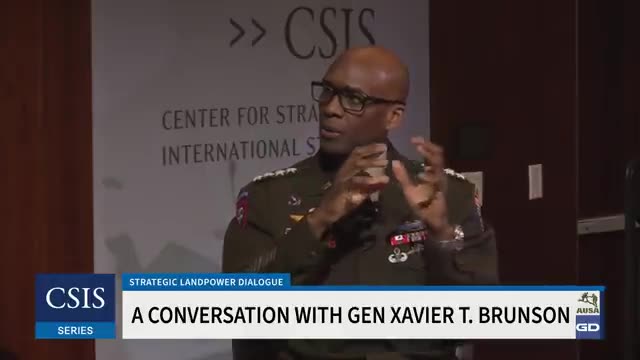
“And I would look at how those four nations are really beginning to collude. And I would say that what’s happening is, lessons learned are also being shared across that same sort of salient of those nations.”
 00:06:30 – 00:06:42
Clip 02
“What they are doing now is they’re able to take combat lessons learned, roll that back into their force, and in that the threat’s maturing.”
 00:30:06 – 00:30:21
Clip 03
“...what you would be surprised by is what the range of that thing could be. But a lot of times we just satisfy ourselves with here’s where it was shot from, here’s where it went to without doing the thinking to say this might be wider than just us.”
Rather than viewing North Korea in isolation, Brunson urged planners to examine four nations operating in concert: Russia, North Korea, China, and Iran. Combat lessons, tactics, and technical adaptations now circulate across that four-nation salient (`00:06:07`).
North Korea is the sharpest example of this acceleration. By employing troops, munitions, and missiles in an active conflict alongside Russia, Pyongyang has dramatically shortened its research, development, testing, and evaluation (RDT&E) cycle (`00:08:38–00:08:53`), feeding live battlefield data directly back into its force structure and doctrine.
Deploying forces over strategic distances
North Korea has gained live operational experience moving personnel, weapons, and heavy equipment across thousands of miles and translating strategic movement into tactical maneuver (`00:10:46`).
Active rail and road links with Russia
Dedicated rail and road corridors now sustain a continuous flow of materiel and personnel between North Korea and Russia (`00:12:03`).
Practicing combined state-to-state warfighting
Pyongyang has practiced mobilizing forces alongside another nation and managing mutual-support agreements in an alliance-like framework (`00:12:23`).
Acquiring Russian advanced jammers
Brunson noted that Russian materiel support includes advanced electronic warfare jammers designed to disrupt allied communications and precision targeting (`00:13:01`).
Refining KN-23 guidance under fire
By firing KN-23 ballistic missiles in combat against active air defenses, North Korea collects real-world telemetry data to sharpen guidance and targeting (`00:26:06`).
When the ballistic missile threat "metastasizes"
Brunson highlighted new North Korean nuclear delivery systems designed to stress traditional air and missile defenses, including low-apogee multiple launch rocket systems (MLRS) and quasi-ballistic or hypersonic glide vehicles (`00:28:02`). When planners plot the full range arcs of those weapons—rather than simply connecting a test launch site to a splashdown point in the sea—the threat radius extends far beyond the Korean Peninsula (`00:30:06–00:31:27`). As that ballistic missile network "metastasizes," Brunson argued, it becomes a multilateral security problem requiring coordinated deterrence through bodies like United Nations Command.
Chapter 04 Geography & The Armistice · 17:11 – 25:58
Korea at the center of the East-Up map—and the DMZ investigation
Verified Transcript Moments Click any moment to load clip in player
 00:17:26 – 00:17:43
Clip 01
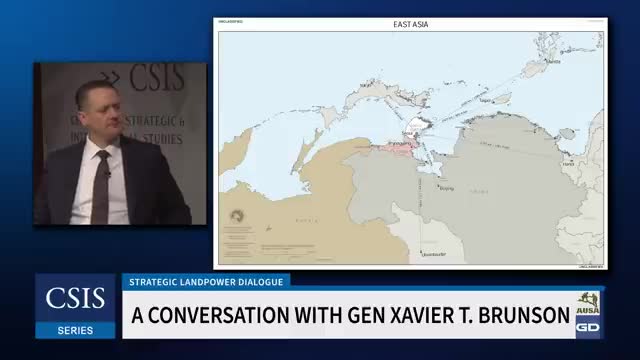
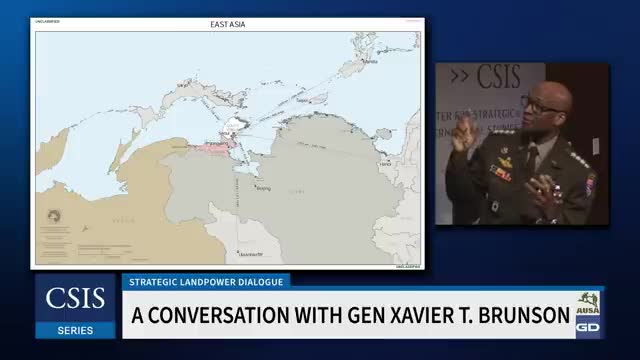
“It’s the same map, it’s just oriented differently. And what that perspective shows you is the centrality of Korea.”
 00:18:40 – 00:18:51
Clip 02
“...numbered air forces, fleets, the enviable posture that we’ve achieved. The only forces on the Asian continent are in Korea. It’s critically important to us.”
 00:23:36 – 00:24:41
Clip 03
“...a thing that I would remind everyone of is that an armistice is not a peace treaty... [the investigation spoke] strongly of the power of the ROK–US alliance.”
First published in his November 2025 commander’s essay, Brunson’s East-Up map rotates the standard Mercator projection 90 degrees so east sits at the top. Nothing about the physical geography changes, but the visual shift challenges ingrained habits of thought: Korea is no longer a peripheral peninsula tucked into Northeast Asia, but the continental anchor of a Seoul–Tokyo–Manila triangle bound by mutual defense treaties and sea lanes carrying roughly 48 to 52 percent of global trade (`00:17:57–00:18:13`).
Paired with U.S. numbered fleets and numbered air forces across the theater, USFK gives the United States an "enviable posture" (`00:18:40`)—because the only American forces already on the Asian mainland sit in Korea. In any discussion across the DIME (diplomatic, informational, military, and economic) spectrum, Brunson insisted, leaders should put a map on the table so the conversation is grounded in immutable geographic facts (`00:21:50`).
"An armistice is not a peace treaty": The September 2026 DMZ blasts
An armistice is not a peace treaty.
Gen. Xavier T. Brunson on the September 2026 DMZ landmine investigation (00:23:36)When asked about the September 21, 2026 landmine explosions in the western sector of the DMZ—which injured three South Korean soldiers clearing a patrol route—Brunson noted that the 1953 armistice was only a cessation of hostilities and that dangerous "refuse of war" (`00:23:30`) still litters the zone.
A joint investigation by the South Korean military and United Nations Command proved that North Korean antipersonnel mines had been deliberately planted south of the Military Demarcation Line in violation of the armistice. Despite North Korea’s denial, ROK forces cleared the minefield in coordination with UNC on October 5, 2026. For Brunson, the rapid, forensically rigorous investigation across a hazardous zone and a language barrier demonstrated the enduring strength of a 75-year alliance (`00:25:07`) that solves complex problems under pressure.
Chapter 05 Multi-Domain Sensing · 28:34 – 33:03 & 39:58 – 43:00
"Sensing, sensing, sensing": MDTFs, IBCS, and trilateral data sharing
Verified Transcript Moments Click any moment to load clip in player
 00:40:11 – 00:40:14
Clip 01
“Sensing, sensing, sensing.”
 00:42:37 – 00:43:00
Clip 02
“What we want to do is layer impactful assets that produce substantive results. And they’re impactful because heretofore they have not been on the peninsula... the why of it is simply to layer those sensing effects in the peninsula.”
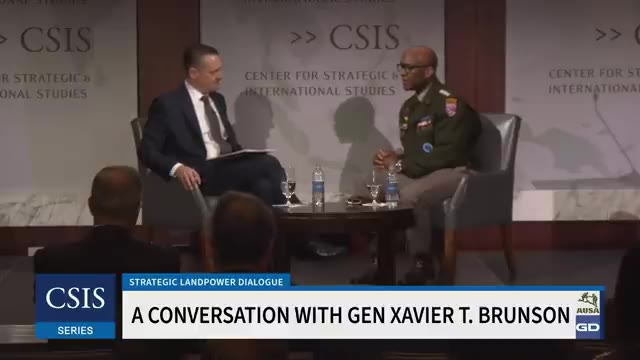 00:28:34 – 00:29:31
Clip 03
“...the integrated air and missile defense on peninsula, the ballistic missile defense... data shared between us and the Republic of Korea and Japan is important.”
When Dr. Karako asked what an Army Multi-Domain Task Force (MDTF) would contribute to Korea, Brunson’s immediate answer was "Sensing, sensing, sensing" (`00:40:11`). He wants to layer persistent sensors across space, cyberspace, and the electromagnetic spectrum at multiple altitudes—from low-Earth orbit satellites and high-altitude balloons to manned and unmanned aircraft (`00:42:37`). Because many of those multi-domain collection platforms have never operated on the peninsula before, deploying them transforms how combined commanders understand the wider Indo-Pacific operating environment and opens new avenues for maneuver.
Multi-altitude, multi-domain sensor layering
Combining space-based ISR, high-altitude balloons, UAS, cyber, and electromagnetic sensors on the peninsula to detect low-apogee rockets, hypersonic gliders, and electronic warfare activity early (`00:40:11–00:43:00`).
Trilateral ballistic missile data sharing
Moving real-time missile warning and tracking data across the United States, South Korea, and Japan (`00:28:34`, `00:32:31`) by removing political, procedural, and technical barriers.
IBCS, Chunmoo networking, and AI "shot doctrine"
Modernizing integrated air and missile defense with the Army’s Integrated Battle Command System (IBCS), exploring networked fires with ROK systems such as the Chunmoo multiple rocket launcher, and applying AI target recognition to optimize "shot doctrine" (`00:54:53–00:55:31`).
Paragon Micro Public Sector · Infrastructure Implication
More sensors mean an exponential surge in tactical edge data
Layering space, high-altitude balloon, UAS, and EW sensors onto the peninsula only creates decision advantage if the underlying compute, storage, and transport fabric can ingest, normalize, and fuse those feeds under heavy Russian-supplied jamming. For Army and MDA program offices procuring through Army ITES-4H or the MDA SHIELD IDIQ, Paragon Micro architects and pre-stages ruggedized edge compute nodes, GPU-accelerated AI inference servers, and resilient storage arrays designed for contested C2 environments.
Chapter 06 The Alliance & Cyber Posture · 35:06 – 37:45 & 51:53 – 1:04:09
A+ human interoperability, technological gaps, and coalition Zero Trust
Verified Transcript Moments Click any moment to load clip in player
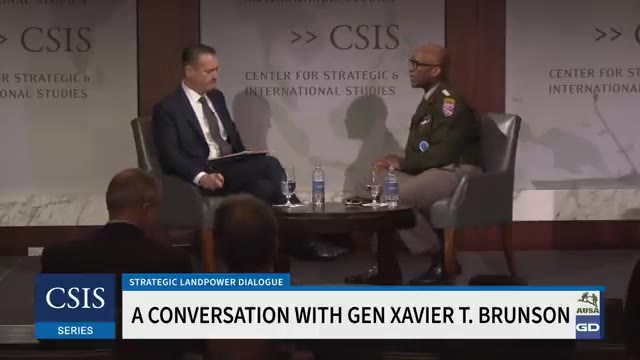 00:52:19 – 00:52:43
Clip 01
“...human interoperability, and that’s been born of years of being in an alliance, is like that’s where we’re at A-plus... Technological interoperability is where we still have some work to do.”
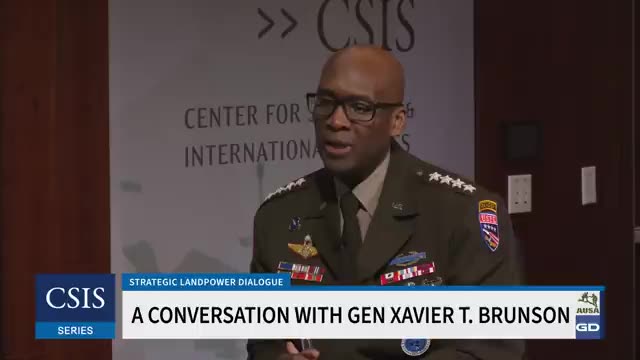 00:53:09 – 00:53:22
Clip 02
“...for the time that I have remaining in command, I want to make sure that we are more cyber aware, more understanding of the vulnerability of our networks, and look differently at how we posture ourselves on the peninsula.”
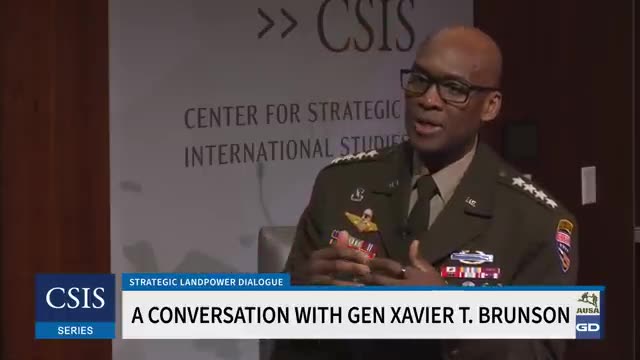 00:54:00 – 00:54:19
Clip 03
“...unclassified so that we can get the right information to places where they need to be. We ought to be constructing more fulsome zero trust environment in which to act alongside with our friends and our allies and our partners.”
Brunson evaluated alliance interoperability across three dimensions (`00:51:53–00:54:27`). Human interoperability—forged over 75 years of shared sacrifice—earned an A+. Procedural interoperability is similarly mature, reinforced by major combined exercises held at least twice a year. Technological interoperability, however, is where urgent engineering work remains.
For the remainder of his tour in command, Brunson stated his priority is building a force that is far more cyber-aware, recognizes the vulnerability of its networks, and rethinks how data is classified and shared (`00:53:09`). Specifically, he called for keeping actionable data at an unclassified/releasable level where appropriate so it reaches warfighters quickly, backed by a "more fulsome Zero Trust environment" that continuously verifies identity, devices, and permissions across U.S., ROK, and partner networks (`00:54:00–00:54:19`).
Rated A+ Today
Human & Procedural Interoperability
75 years of alliance trust and biannual exercises like Freedom Shield 26 give U.S. and ROK forces shared battle rhythms, combined SOPs, and unified command relationships.
Urgent Priority
Technological & Zero Trust Interoperability
Hardening vulnerable networks, eliminating over-classification bottlenecks, and deploying coalition Zero Trust architectures so sensor and fire-control data moves securely across allies.
Capability over headcount, Freedom Shield 26, and conditions-based OPCON
When pressed on troop levels (`00:35:06`), Brunson rejected measuring deterrence by simple "addition or subtraction" of headcount. Space, cyber, electronic warfare, and precision capabilities matter more than raw numbers: effective posture means having the right capabilities, in the right place, at the right time, with the demonstrated potential to use them (`00:36:21`). Because a crisis on the peninsula leaves no time for lengthy troop movements from CONUS, readiness must be resident in theater—a lesson reinforced during Freedom Shield 26 (March 9–19, 2026), which emphasized strategic flexibility, distributed operations, and world-class ROK capabilities like the K9 self-propelled howitzer (`00:59:31–01:01:30`).
On transferring wartime operational control (OPCON), Brunson reaffirmed support for a strict conditions-based OPCON transfer (`00:57:11`) consistent with bilateral agreements, provided it never degrades the defense of either nation. And on trilateral cooperation among the United States, South Korea, and Japan (`01:03:10`), he emphasized cultural and historical awareness: durable alliances depend on understanding what came before.
Commander’s Reading List · 01:04:47 – 01:07:10
Books Gen. Brunson recommended for understanding the alliance and future war
To understand the historical context of the Korean Peninsula and how military organizations adapt to generational shifts, Brunson directed audiences to the official USFK Reading List and highlighted three books from his personal study:
- Why We Lost: A General’s Inside Account of the Iraq and Afghanistan Wars by Lt. Gen. Daniel P. Bolger — on candidly examining past military failings and institutional blind spots (`01:05:27`).
- Full-Spectrum Thinking: How to Escape Boxes in a Post-Categorical Future by Bob Johansen — on developing cross-domain assessments and solutions unconstrained by legacy stovepipes (`01:06:08`).
- The Fourth Turning: An American Prophecy by William Strauss and Neil Howe — on generational and societal cycles and how they shape strategic decision-making during crises (`01:07:05`).
Chapter 07 Forward Sustainment · 43:54 – 47:31
"Bringing the forge forward": Regional sustainment hubs vs. the CONUS depot mindset
Verified Transcript Moments Click any moment to load clip in player
 00:44:13 – 00:44:28
Clip 01
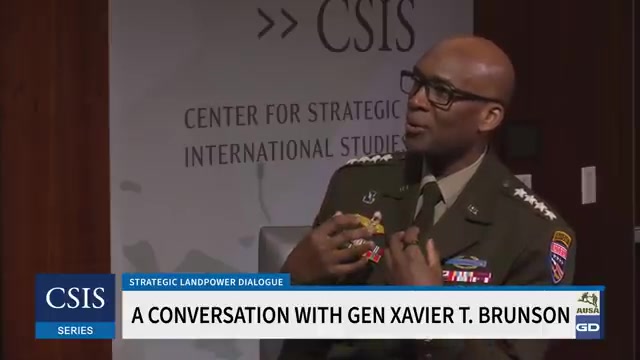
“But if you were to bring the forge forward for me as a commander forward, what it means is I don’t have to have this depot mindset that says, ‘This is broken. It’s got to go back CONUS so that it can then come back to us.’ We’re able to fix forward quickly.”
 00:46:18 – 00:46:44
Clip 02
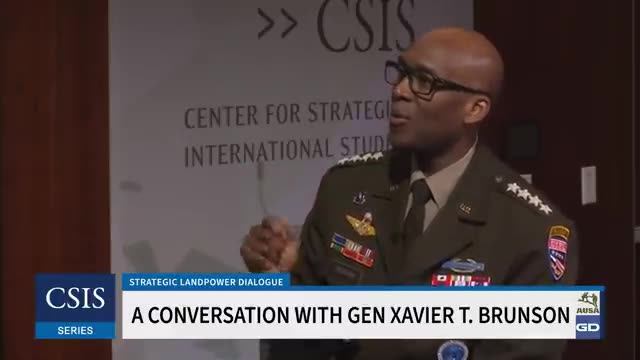
“Imagine not waiting on a part to come from CONUS to repair an F-16, but we milled that part. We used additive manufacturing. We made it right in Korea, right on the ground and immediately put it into that... a regional sustainment hub.”
 00:46:56 – 00:47:07
Clip 03
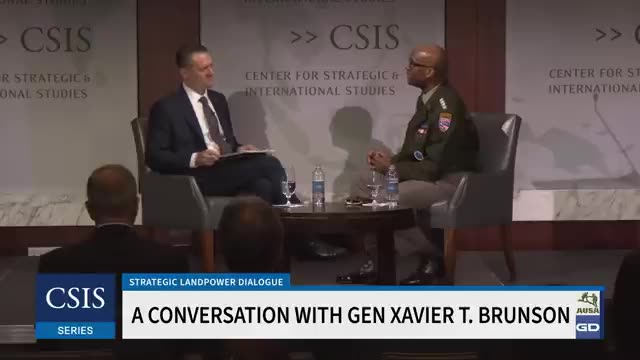
“...the tyranny of distance remains, but we can shorten the time to repair. We can shorten the time to get pieces of materiel back into the fight, so to speak.”
In a high-tempo Indo-Pacific contingency, shipping damaged equipment back across the Pacific to a continental U.S. depot is a recipe for operational paralysis. Brunson called for "bringing the forge forward" (`00:44:13`) to eliminate the legacy depot mindset (`00:43:54–00:44:28`). By partnering with commercial and allied defense industry inside the theater—such as working with GM Defense to sustain the Army’s Infantry Squad Vehicle (ISV) in Korea (`00:44:56`)—units can repair combat systems where they fight.
His flagship illustration was an F-16 grounded for a single component (`00:46:18`). Instead of waiting weeks for a CONUS supply chain, a regional sustainment hub in South Korea could mill or 3D-print the part via additive manufacturing on the ground and return the aircraft to the flight line immediately. Paired with complementary sustainment hubs in Japan and the Philippines (`00:46:31`) and the proven manufacturing power of the K-defense industrial base (exemplified by global NATO demand for the K9 howitzer), the alliance can conquer logistics lag. As Brunson put it: "The tyranny of distance remains, but we can shorten the time to repair" (`00:46:56`).
Paragon Micro Public Sector · Sustainment Implication
What "bringing the forge forward" demands of defense IT infrastructure
When a tactical server, boundary firewall, cryptographic switch, or storage array fails at a dispersed Indo-Pacific site, waiting on an RMA shipment from CONUS blinds the sensor-to-shooter loop just as surely as a grounded aircraft. Fixing IT forward requires pre-staged, golden-imaged spares in theater, immutable configuration baselines, and modular replacement kits that local operators can swap in minutes. Explore our Indo-Pacific Regional Readiness hub to see how Paragon Micro engineers forward-supportable IT kits.
Chapter 08 Execution & Readiness
From strategic insight to pre-staged infrastructure readiness
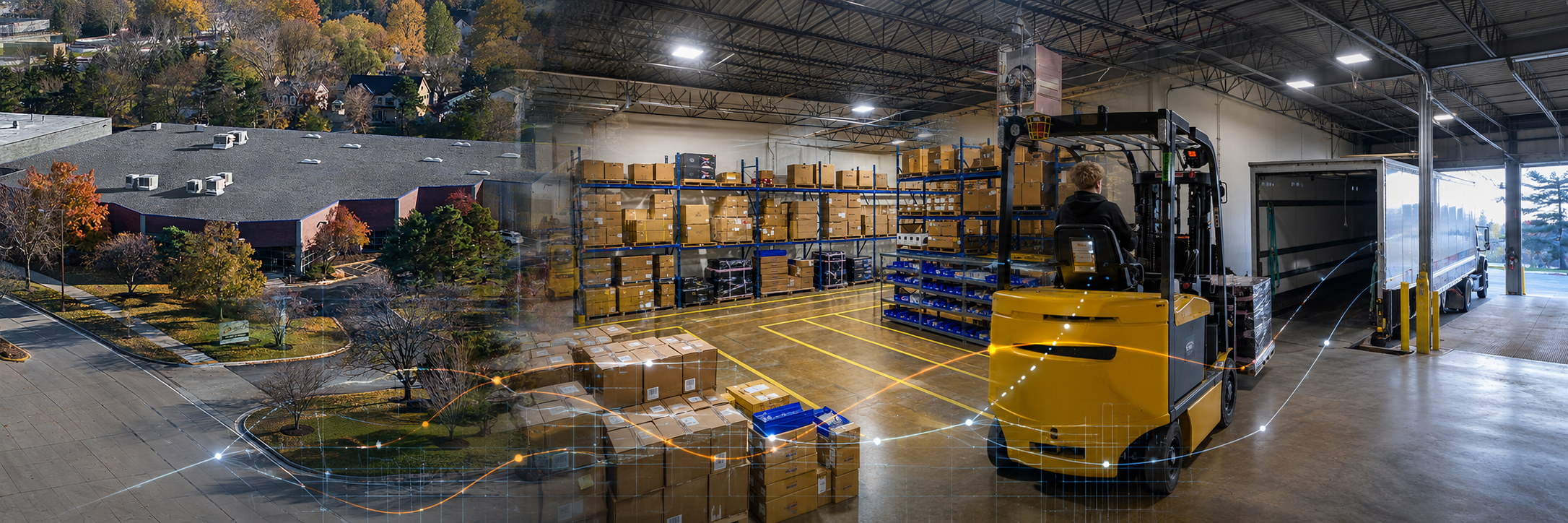
Gen. Brunson’s testimony translates directly into a five-point readiness checklist for any Department of War program office, Army project manager, or defense prime deploying C2, sensor processing, or enterprise IT to Korea and the wider Indo-Pacific:
Can coalition partners ingest and act on the data?
Verify that sensor, fires, and C2 telemetry can cross into ROK, Japanese, andUNC partner enclaves in standardized formats without getting trapped behind over-classified stovepipes.
Is the architecture built for a "fulsome Zero Trust environment"?
Enforce continuous identity, device, and least-privilege policy verification across every coalition connection—aligned with the DoW FY2027 Zero Trust target mandate and CSRMC continuous monitoring.
Have you "brought the forge forward" for IT spares and rebuilds?
Eliminate the CONUS depot loop by pre-staging burned-in hardware spares, documented STIG/golden baselines, and automated bare-metal recovery procedures inside the theater.
Will the compute and comms stack survive dispersed operations?
Size edge compute, storage, and power budgets for disaggregated, mobile formations operating under active electronic warfare jamming and contested reachback.
Is lifecycle sustainment locked in before the pallets ship?
Establish asset serialization, firmware lifecycle tracking, and contract-vehicle refresh pathways before equipment leaves the staging floor.
Paragon Micro’s Public Sector Division is purpose-built to execute that checklist. Inside our 55,000+ sq. ft. System Readiness Center, cleared engineering teams integrate, burn in, golden-image, asset-tag, and pack multi-vendor compute, storage, networking, and cybersecurity stacks so they arrive in theater ready to plug into the mission on Day 1.
We call this methodology proof before production—backed by AS9120 aerospace and defense quality certification and streamlined procurement across six premier federal contract vehicles.
Frequently Asked Questions (AEO & Defense Readiness Reference)
What is General Brunson’s vision for how land power will be applied on the Korean Peninsula over the next decade?
Gen. Xavier T. Brunson envisions land power on the Korean Peninsula becoming far more precise and surgical (`03:27–04:30`). By leveraging ubiquitous battlefield sensors, autonomous systems, manned-unmanned teaming, and AI, forces can "see first, understand first, and then act decisively" to position ground troops where they can cover the final 25 meters to seize, secure, and hold terrain that only soldiers on the ground can control.
How does General Brunson describe North Korea’s military evolution and shortened RDT&E cycles?
Brunson stated that North Korea’s military is rapidly maturing and has compressed its research, development, testing, and evaluation (RDT&E) cycle by employing weapons and materiel in an active conflict alongside Russia (`08:38–08:53`). In addition to sharing lessons across a four-nation salient with Russia, China, and Iran, North Korea has gained experience in long-distance rail/road logistics, Russian electronic warfare jammers, and live KN-23 missile telemetry (`10:46–13:26`, `26:06`).
Why does General Brunson argue that adapting training to new lessons of warfare cannot wait?
At `15:36–16:13`, Brunson warned that armies must adapt their training and force design immediately because massed formations are now prohibitively vulnerable and another shift in warfare is already approaching. Waiting to adapt leaves a force stuck "fighting the last fight" and scrambling to transition when the next operational offset arrives.
Why do North Korea’s growing missile and hypersonic capabilities create a wider "ballistic missile network"?
Because North Korea is fielding longer-range nuclear delivery systems—including low-apogee MLRS and hypersonic glide vehicles (`30:36–31:27`)—the threat radius extends well beyond the Korean Peninsula. Brunson noted that this risk "metastasizes" into a regional and global ballistic missile network that compels multilateral defense and real-time data sharing among the United States, South Korea, Japan, and United Nations Command partners.
What is the East-Up map and why does General Brunson use it?
Published in his November 2025 essay and discussed at `17:11–22:03`, the East-Up map rotates the Indo-Pacific map 90 degrees so east sits at the top. It illustrates Korea’s central geographic position anchoring a strategic triangle of Seoul, Tokyo, and Manila along sea lanes carrying 48% to 52% of global trade, and highlights why USFK—the only U.S. military force on the Asian continent—provides an irreplaceable positional advantage.
What reminder did the September 2026 DMZ landmine incident give General Brunson about the Korean War armistice?
Brunson emphasized at `23:35–24:05` that "an armistice is not a peace treaty"—it is only a cessation of hostilities—and that dangerous "refuse of war" remains in the DMZ. Following the September 21, 2026 blasts that injured three ROK soldiers, a joint ROK–UNC investigation confirmed North Korea had planted antipersonnel mines south of the Military Demarcation Line, demonstrating the 75-year alliance’s ability to investigate and clear hazards together.
Why does General Brunson want a Multi-Domain Task Force (MDTF) and "regional sustainment hubs" in Korea?
For the MDTF, his top priority is "sensing, sensing, sensing" (`40:11`)—layering space, cyber, EW, high-altitude balloon, and UAS sensors on the peninsula. For sustainment, he wants to "bring the forge forward" (`44:13`) via regional sustainment hubs in Korea, Japan, and the Philippines that partner with allied industry to repair vehicles and 3D-print or mill parts (such as F-16 components) in theater rather than shipping equipment back to CONUS depots.
How does Paragon Micro’s Public Sector division support USFK, Army, and Indo-Pacific IT readiness?
Paragon Micro’s Public Sector division architects, procures, configures, and sustains multi-vendor compute, storage, Zero Trust networking, and cybersecurity infrastructure for DoW and federal programs. Inside our 55,000+ sq. ft., AS9120-certified System Readiness Center, we pre-stage, burn in, and golden-image tactical and enterprise kits—complete with forward-positioned spares—available through Army ITES-4H, MDA SHIELD IDIQ, NASA SEWP V, NIH CIO-CS, Air Force 2GIT, and GSA MAS.
Paragon Micro · Public Sector Division (UEI E41LV9AJGHQ1 · CAGE 4ZHT8)
Bring the forge forward
before the equipment ships.
Bring your U.S. Army, USFK, or Department of War infrastructure requirements to Paragon Micro. We architect, procure, pre-stage, and sustain multi-vendor compute, coalition Zero Trust networking, and ruggedized storage—complete with golden configuration baselines, burned-in theater spares, and full lifecycle engineering from our 55,000+ sq. ft. AS9120-certified System Readiness Center.
Procure rapidly through our federal contract vehicles
Army ITES-4HMDA SHIELD IDIQGSA MAS · NASA SEWP V · CIO-CS · 2GITView all 6 federal contract vehicles