



U.S. Indo-Pacific Command | Dispersed Operations IT
Pacific links break from storms, shipwrecks, and anchors. Build each island site to keep fighting until the repair ship arrives.
On April 29, 2026, Taiwan announced that the submarine cable serving Dongyin—a heavily fortified island in the First Island Chain—had severed after weather shifted a shipwreck onto the line, requiring a three-month wait until the end of July for a repair vessel. Under Agile Combat Employment and Multi-Domain Command Pacific's Cross-Domain Contact Layer, U.S. forces are dispersing across dozens of Indo-Pacific locations. Here is how theater CIOs, communications squadrons, and integrators engineer each island site to operate independently when its links home are thin or gone.
- 01
Size local identity, C2, and storage for 90-day cable repair windows
- 02
Pre-position golden-imaged spares and cross-train local operators
- 03
Harden enclosures, cooling, and microgrid power for Super Typhoons
- 04
Burn-in test and kit the complete stack before it leaves CONUS
Bottom line up front (BLUF)
- Strategy demands dispersal across the First Island Chain: The January 23, 2026 National Defense Strategy directs the Department of War to "erect a strong denial defense along the First Island Chain." Executing Air Force Agile Combat Employment (ACE)—proven across 50 locations in REFORPAC 2025—and the U.S. Army's Cross-Domain Contact Layer (CDCL) spreads forces across dozens of remote islands connected by fragile undersea cables.
- Pacific cable repairs take 5 weeks to 9 months: From the 2022 Tonga eruption and 2023 Matsu cuts to the 2025 Penghu sabotage conviction and the April–July 2026 Dongyin cable break, island sites routinely wait two to three months or more for a specialized repair ship while falling back on narrowband microwave or satellite links.
- Physical weather is as dangerous as enemy jamming: When Super Typhoon Mawar struck Guam with 140 mph winds in May 2023, it ripped sections of the roof off the Andersen Air Force Base data center—requiring eight airmen with sandbags and buckets to keep 157 long-haul circuits alive. Island IT requires salt-fog/humidity-rated hardware, watertight shelters, and microgrid power.
- Pre-stage tested kits and on-island spares: Every component that would require a sealift vessel or strategic airlift sortie to replace must already sit on the island as a golden-imaged spare—shipped from an AS9120-certified staging facility with FIPS 140-3 encryption and local identity survivorship built in.
Chapter 01 | The Indo-Pacific theater
Dispersed operations spread the Joint Force across thousands of miles of ocean
Released on January 23, 2026, the 2026 National Defense Strategy places deterring aggression in the Indo-Pacific at the center of U.S. defense planning—explicitly directing the Department of War to "erect a strong denial defense along the First Island Chain."
To survive inside an adversary's dense anti-access/area-denial (A2/AD) Weapons Engagement Zone (WEZ), U.S. air, ground, naval, and Marine formations are shifting away from a handful of concentrated main operating bases toward dozens of smaller, distributed operating locations. In July and August 2025, the U.S. Air Force rehearsed that operational model at theater scale during REFORPAC 2025 (Resolute Force Pacific). According to U.S. Indo-Pacific Command, more than 12,000 service members and roughly 400 aircraft operated simultaneously across 50 locations spanning 3,000 miles, executing Agile Combat Employment (ACE) hub-and-spoke maneuver across the Pacific.
Even moving compact command-and-control hardware across Indo-Pacific distances exposes severe logistics friction. As DefenseScoop documented following REFORPAC 2025, transporting just two portable next-generation C2 kits from Tinker Air Force Base, Oklahoma, to Misawa and Yokota Air Bases in Japan required multiple ground convoys and international airlift legs—prompting exercise planners to warn that Pacific sustainment logistics are unforgiving even for small tactical kits.
U.S. Air Force (ACE & REFORPAC)
50 spokes across 3,000 miles
Under Air Force Doctrine Note 1-21 (Agile Combat Employment), expeditionary airfield teams must generate combat sorties from austere island spokes with minimal footprint—assuming they will lose continuous wideband connectivity with theater Air Operations Centers.
U.S. Army (MDCPAC & CDCL)
Forward edge inside the WEZ
As Col. Charles King of Multi-Domain Command Pacific (MDCPAC) briefed at AUSA 2026, small independent Army teams execute a forward cover mission inside the WEZ—using the Cross-Domain Contact Layer (CDCL) and edge agentic AI to compress 72-hour targeting cycles to seconds while aggregating and disaggregating to stay survivable.
Division Battle Management
Small signatures, local autonomy
Writing for West Point's Modern War Institute in September 2026, strategist Michael Carvelli emphasized that Pacific oceanic distances and enemy electronic warfare will fracture continuous coordination between island sectors—requiring command posts built for dispersion, redundancy, mobility, and low electromagnetic signatures.
The island site readiness test
If the submarine cable serving your island site severed tonight and the repair ship were 90 days away, what mission systems would still work tomorrow?
Answer that question for every spoke location on your posture plan before a storm, anchor drag, or grey-zone cut forces the test.
Chapter 02 | The fragile subsea lifelines
What has severed Pacific island links—and how many months repairs actually took
While major hubs like Guam or Oahu sit at the crossroads of multiple trans-Pacific fiber trunks, smaller forward islands along the First and Second Island Chains typically rely on only one or two submarine spur cables. Over the past four years, volcanic eruptions, typhoons, shifting shipwrecks, and vessel anchor drags have repeatedly severed those lifelines—proving that peacetime and grey-zone cable outages last for months:
-
January 15, 2022
Tonga Volcanic Eruption Severs International & Domestic Cables: A massive undersea volcanic eruption and tsunami sever Tonga's sole 827-kilometer international fiber link to Fiji as well as its domestic inter-island cable. The island nation relies on emergency satellite terminals until a repair vessel splices 90 kilometers of replacement cable on February 22, 2022—more than 5 weeks later—while outer-island cable repairs face projections of up to 9 months.
Engineering lesson:Subsea faults in deep or hazardous waters require specialized cable ships and custom spare cable lengths that take months to mobilize.
-
February 2 & 8, 2023
Dual Cable Cuts Isolate Taiwan’s Matsu Islands: Within six days, both submarine cables linking Taiwan to the strategic Matsu archipelago (~14,000 residents and a garrisoned island chain) are severed by a Chinese fishing vessel and a cargo freighter. Residents and units fall back on a congested microwave radio link where text messages take hours to transmit, and the earliest a cable repair ship can arrive is April 20, 2023—over 10 weeks after the blackout began.
Engineering lesson:Microwave radio backups carry a small fraction of fiber capacity; without strict QoS traffic prioritization and local caching, routine traffic chokes out command links.
-
May 24–25, 2023
Super Typhoon Mawar Strikes Guam (140 mph Winds): Typhoon Mawar batters Guam for 72 hours with 140 mph sustained winds and over two feet of rain—stripping sections of the roof off the Andersen Air Force Base data center and triggering island-wide rolling power blackouts that persist for months.
Engineering lesson:Surviving intact subsea cables means nothing if typhoon winds, water intrusion, or failed island power grids take down the base data center itself.
-
February 25 & June 2025
Hong Tai 58 Severs Taiwan–Penghu Cable (Captain Sentenced): Minutes after the Togo-flagged freighter Hong Tai 58 drags anchor across the Taiwan Strait, Taiwan's coast guard detects a severed submarine cable serving the strategic Penghu Islands and detains the vessel. In June 2025, a Taiwanese court sentences the ship's Chinese captain to three years in prison under the Telecommunications Management Act—noting Taiwan suffered 36 subsea cable damage incidents between 2019 and 2023.
Engineering lesson:Frequent grey-zone anchor drags make submarine cable cuts a routine operational condition rather than a once-in-a-decade anomaly.
-
April 29 – July 2026
Shifted Shipwreck Severs Dongyin Island Military Link: On April 29, 2026, Taiwan announces that the submarine cable connecting Dongyin—a heavily fortified island at the northern entrance to the Taiwan Strait—to Beigan has severed after rough weather shifted a sunken shipwreck onto the cable bed. Traffic drops onto a microwave backup link, with physical cable repairs projected to take three full months until the end of July 2026.
Engineering lesson:Every dispersed Pacific site must be engineered from day one to run autonomously across a 90-day cable repair window.
Chapter 03 | Environmental & facility survival
What Super Typhoon Mawar taught the Pacific force about data center roofs and power
Located 3,800 miles west of Hawaii, Andersen Air Force Base on Guam serves as the U.S. Air Force's premier forward logistics and bomber projection hub in the Western Pacific. In May 2023, Super Typhoon Mawar demonstrated how rapidly extreme Indo-Pacific weather can threaten the physical room housing theater communications.
As 140 mph winds and torrential rain pounded Guam over a 72-hour period, the storm tore away sections of the roof on Andersen's primary communications and data center facility around 2:30 a.m. on May 25, pouring rainwater directly into the building housing the base's core servers and switches. Inside the breached facility, a team of eight Air Force communications airmen refused to evacuate—barricading wind-blown doors with sandbags and duct tape, bailing roughly 140 gallons of water using buckets, mops, and their own uniform shirts, and conducting 30-minute fire and leak patrols around energized racks. Through sheer grit, those eight airmen kept all 157 long-haul circuits, the base's direct command line to Washington, and the Network Control Center 100% online throughout the typhoon.
Even after the wind subsided, severe damage to Guam's civilian electrical grid left parts of the island experiencing rolling blackouts for months. For installation commanders and systems integrators building out Pacific dispersed sites under FORTRESS America, Typhoon Mawar proved that heroics should not have to compensate for facility fragility. Dispersed Pacific IT requires four physical protections:
01 · Hardened Enclosures
Watertight, typhoon-rated shelters and IP66/MIL-STD-810H transit cases
Pacific requirement: Protects compute and switching if building roofs or expeditionary tents are breached by 140+ mph winds and driving rain.
02 · Salt-Fog & Thermal Ratings
Rugged short-depth servers (e.g., Dell PowerEdge XR8000 / XR7620) rated to 55°C–65°C
Pacific requirement: Standard commercial office servers corrode in tropical salt air and thermally shut down if storm damage disables room chillers.
03 · Islanded Power & Cooling
Double-conversion UPS, -48V DC / tactical solar-battery banks, and backed-up HVAC
Pacific requirement: Aligns with FORTRESS America Pillar 1 so servers, radios, and cooling survive months of host-island utility blackouts.
04 · Second-Node Redundancy
Geographically separated secondary node on the installation
Pacific requirement: Ensures a single roof breach or kinetic strike does not sever all 157 long-haul circuits or local C2 at once.
Chapter 04 | The five island design rules
Five engineering decisions to keep each Pacific site running until the repair ship arrives
Our companion guide on Degraded Reachback establishes the four baseline questions every base must answer when long-haul cables are cut: which applications execute locally, how many days of data local storage holds, how PACE links fail over, and how QoS rules prioritize command traffic. Dispersed Indo-Pacific island spokes add five distinct engineering requirements because they are small, separated by thousands of miles of ocean, and impossible to resupply quickly once a crisis begins:
| Island design rule | What it governs at the spoke | What a deployment-ready Pacific architecture looks like |
|---|---|---|
| 01. Size for a 90-day cable repair | Local identity, time, C2 apps, and NVMe storage buffers | Local Active Directory/IdP replicas, cached CAC OCSP responders, a GPS-disciplined Stratum-1 NTP clock (preventing the 5-minute Kerberos lockout), cached geospatial maps, and local NVMe/SAN storage sized for a 3-month subsea cable repair window. |
| 02. Stock the island with golden spares | On-site replacement servers, switches, optics, drives, and PSUs | Pre-configured, golden-imaged spare drives, power supplies, transceivers, switches, and radios stored in a separate, climate-controlled bunker on the same island—aligning with FORTRESS America Pillar 3 (Strategic Defense Reserve). |
| 03. Cross-train local site operators | MOS-agnostic maintenance and bare-metal recovery | At least two personnel on every rotation trained with laminated, step-by-step runbooks to swap a failed server sled or switch, verify Dell Secured Component Verification (SCV) integrity, and restore configurations from the local air-gapped vault without a vendor FSR. |
| 04. Engineer multi-orbit PACE & Zero Trust | Microwave, LEO/MEO/GEO SATCOM, and cryptographic compliance | Automated PACE failover from subsea fiber to line-of-sight microwave and multi-orbit SATCOM, wrapped in FIPS 140-3 validated encryption (following the September 21, 2026 NIST FIPS 140-2 cutoff) and aligned with the September 30, 2027 DoW Zero Trust deadline. |
| 05. Ship it as a burn-in tested kit | Factory-to-island integration, imaging, and chain of custody | The complete multi-OEM stack racked, cabled, golden-imaged, and burn-in tested together inside an AS9120-certified staging facility before loading onto strategic airlift—eliminating DOA parts 3,800 miles from home. |
Field it using the "Pilot-First" multi-site rollout model: When deploying standardized IT kits across 15 to 50 dispersed Pacific locations, never ship untested bills of materials to every island at once. Validate the architecture at one or two representative pilot sites first, refine the cabling, power draw, and failover scripts based on field feedback, lock the baseline configuration, and then stamp out the remaining kits from that proven golden template.
The Pacific sustainment rule of thumb
Every spare part that would require a cargo aircraft or sealift vessel to replace should already be pre-staged on the island—alongside a cross-trained operator who can swap it in under an hour.
Chapter 05 | How we help
Where Dell Technologies Federal and Paragon Micro’s Public Sector Division fit

Paragon Micro, through its Public Sector Division, is a Dell Technologies Federal Platinum Partner (named Dell's 2025 Federal Server Sales Partner of the Year) and an AS9120-certified multi-vendor integrator. We architect, source, pre-stage, and sustain the ruggedized compute kits, high-density storage buffers, tactical power platforms, and multi-orbit PACE communications that keep dispersed Pacific island sites operating autonomously when submarine cables break or typhoons strike.
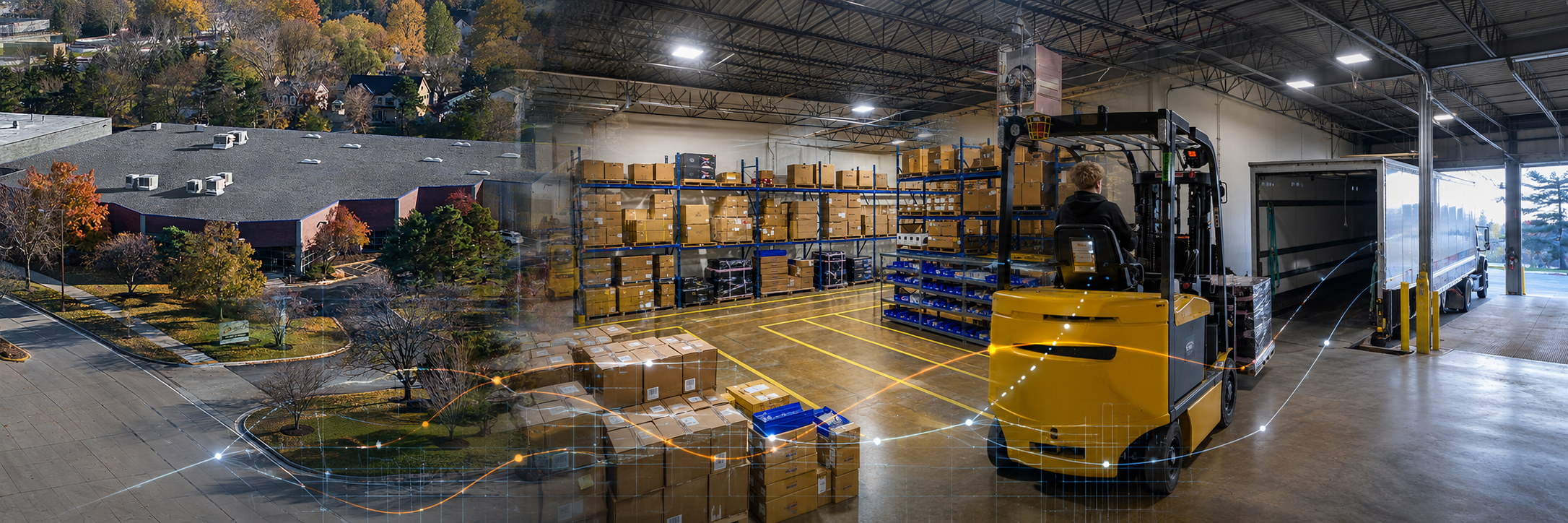
Proven deployable transit kits
2nd Air Support Operations Squadron
For the U.S. Air Force's 2nd Air Support Operations Squadron (2nd ASOS), Paragon Micro engineered and delivered a ruggedized transit-case kit integrating routing, switching, virtualized servers, storage, WAN acceleration, battery-backed UPS power, and tactical radio integration—achieving 100% schedule fulfillment backed by 24-hour cleared technical support.
Proven 17-base "Pilot-First" rollout
U.S. Navy CNIC across 17 installations
Supporting Commander, Navy Installations Command (Navy CNIC), Paragon Micro executed a physical security camera data-storage modernization across 17 Navy installations—validating the design at 2 pilot installations first before rolling out the remaining 15 bases with 100% technical and schedule compliance and zero waivers.
Rugged edge, 5G & tactical power
PowerEdge XR, Pro Rugged & SATCOM
Our Tactical and Rugged Equipment team pairs MIL-STD-810H / NEBS Level 3 Dell PowerEdge XR servers, NativeEdge zero-touch orchestration, Dell Federal 5G, and IP66 Pro Rugged laptops with multi-OEM MANET radios, SATCOM terminals, and solar/generator/lithium-ion power platforms.
Tested before it crosses the Pacific
The System Readiness Center
Inside our 55,000+ sq. ft. System Readiness Center, we verify Dell Secured Component Verification (SCV) certificates, enforce Trade Agreements Act (TAA) compliance, and stage complete island kits plus labeled, golden-imaged spare packs so forward teams unbox a tested, working system.
End-to-end execution for Indo-Pacific program & installation teams
If your theater communications command or prime integration team lacks the facility bandwidth to build, burn-in test, and kit standardized stacks across dozens of dispersed Pacific sites, Paragon Micro's Public Sector division executes the full lifecycle with you:
- 01
Architect & source
Size and procure the rugged servers, 90-day storage arrays, FIPS 140-3 encryptors, UPS/solar power banks, and golden-imaged island spares across dual-qualified OEMs.
- 02
Pilot & pre-stage
Build, cable, load golden images, and burn-in test your pilot kits inside our System Readiness Center—then stamp out identical, pre-labeled kits for every spoke location.
- 03
Train site operators
Equip and train personnel at each dispersed site to operate cut off from CONUS, swap pre-configured spare sleds/switches, and restore from local air-gapped vaults.
- 04
Sustain & replenish
Manage bonded spare replenishment, as-built ATO configuration records, and Section 5949 / CNSA 2.0 lifecycle refreshes across the theater.
Paragon Micro · Public Sector Division | Dell Technologies Federal
Find out how long each Pacific site can run alone.
Share your dispersed site list, current reachback links, and environmental constraints with our defense engineering team. We will help you size each location for a 90-day cable repair window, design the pilot kit and on-island spare package, and pre-stage the complete build inside our System Readiness Center.
U.S. Army organizations and federal agencies can procure through Army ITES-4H (ordering through 2035). The Missile Defense Agency and Department of War organizations can order through the $151B MDA SHIELD IDIQ (HQ0859-26-D-E455), and all federal buyers can leverage NASA SEWP V, NASA SEWP VI (80TECH26D2050), and GSA MAS.
Answers for Pacific planners
Dispersed operations IT: common questions
What do dispersed operations (such as Agile Combat Employment and MDCPAC's CDCL) require from island IT?
Dispersed operations spread air, ground, and maritime forces across dozens of smaller, widely separated locations—such as the 50 locations spanning 3,000 miles in REFORPAC 2025 or Multi-Domain Command Pacific's forward teams inside the Weapons Engagement Zone. Because each island spoke is separated by thousands of miles of ocean and served by only one or two fragile links, each site requires its own local identity/authentication, Stratum-1 NTP clock, C2 compute, 90-day storage buffer, typhoon-hardened power, and on-island configured spares.
How long does it actually take to repair a severed submarine cable in the Indo-Pacific?
Recent Pacific outages show that repairs routinely take between 5 weeks and 9 months depending on ship availability, weather, and maritime permits. Tonga's main international cable took 5 weeks to reconnect in early 2022 (with outer-island links projected at up to 9 months), Taiwan's Matsu islands waited more than 10 weeks for a cable ship in 2023, and the Dongyin military island cable break announced on April 29, 2026 faced a 3-month repair timeline through the end of July 2026.
What backup communications paths do island sites use when a submarine cable breaks?
Island sites typically fail over to line-of-sight microwave radio relays (as seen in the 2023 Matsu and 2026 Dongyin cuts) or multi-orbit satellite communications (as seen in Tonga and military PACE architectures). Because microwave and tactical SATCOM links provide only a fraction of a submarine fiber cable's bandwidth, sites must pre-configure Quality of Service (QoS) traffic-shaping rules so C2 and fires tracks move first while bulk video and software updates wait.
What did Super Typhoon Mawar reveal about data center survivability on Guam?
When Super Typhoon Mawar struck Guam in May 2023 with 140 mph winds and over two feet of rain across 72 hours, wind stripped sections of the roof off the Andersen Air Force Base data center—requiring eight airmen inside the breached building to use sandbags, duct tape, and buckets to remove 140 gallons of water and keep 157 long-haul circuits running. The incident proved that Pacific island IT requires watertight enclosures, salt-fog and high-temperature rated rugged servers, and independent microgrid power.
What cryptographic and CMMC rules apply to dispersed Pacific IT kits in 2026–2027?
On September 21, 2026, NIST moved all FIPS 140-2 certificates to its Historical List, meaning all new WAN/SATCOM encryptors, rugged servers, and self-encrypting drives handling Controlled Unclassified Information (CUI) must specify FIPS 140-3 validated cryptographic modules—and new National Security System (NSS) acquisitions must support CNSA 2.0 quantum-resistant algorithms starting January 1, 2027. While the Department of War suspended CMMC Phase 2 third-party mandates on July 13, 2026 pending its Reform Task Force review, CMMC Phase 1 Level 2 self-assessments and full NIST SP 800-171 Rev 2 compliance remain mandatory for integrators staging CUI kits.
How does Paragon Micro’s Public Sector division help deploy standardized IT across multiple Pacific sites?
As a Dell Technologies Federal Platinum Partner and AS9120-certified multi-vendor integrator, Paragon Micro's Public Sector division builds, golden-images, and burn-in tests complete deployable kits and bonded spare packages inside our 55,000+ sq. ft. System Readiness Center—proven in our deployable transit-case delivery for the USAF 2nd Air Support Operations Squadron and our 17-installation "pilot-first" storage rollout for U.S. Navy CNIC—available via Army ITES-4H, MDA SHIELD IDIQ, NASA SEWP V/VI, and GSA MAS.
Timeline
Key Indo-Pacific & compliance dates through 2027
May 2023
Super Typhoon Mawar (140 mph) breaches Andersen AFB data center roof on Guam
8 airmen keep 157 circuits online
Jul–Aug 2025
USAF executes REFORPAC 2025 across 50 Indo-Pacific locations spanning 3,000 miles
12,000+ personnel & ~400 aircraft
Jan 23, 2026
2026 National Defense Strategy directs a strong denial defense along the First Island Chain
Department of War strategic baseline
Apr–Jul 2026
Shifted shipwreck severs Taiwan's Dongyin military island cable (~3-month repair window)
Site falls back on microwave link
Jul 13, 2026
DoW suspends CMMC Phase 2 third-party mandates; Phase 1 Level 2 self-assessments continue
NIST SP 800-171 Rev 2 remains mandatory
Sep 21, 2026
NIST moves FIPS 140-2 to Historical List; specify FIPS 140-3 on new CUI kits & radios
CMVP cryptographic cutoff
Oct 30, 2026
FORTRESS America Program Office 30-day stand-up deadline (energy, spares & spectrum)
September 30, 2026 establishing memo
Jan 1, 2027
CNSA 2.0 quantum-resistant algorithms required in all new National Security System buys
NSA CNSA 2.0 mandate
Sep 30, 2027
Department of War Target-Level Zero Trust deadline (including disconnected island sites)
One day before AutoWarCom stand-up
Related reading